How Often Should You Repaint Your House Exterior in Yakima?
Our honest answer on repainting timelines in the Yakima Valley, plus the signs that tell you the paint has stopped protecting the house.
October 6, 2026 · 4 min read
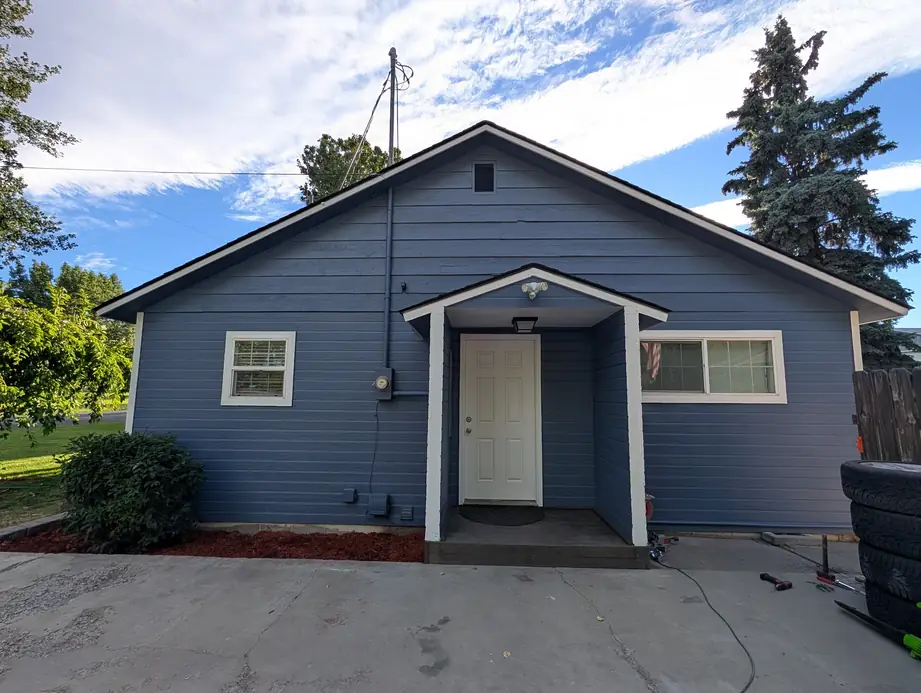
Most people repaint when the house starts to look tired. By then the paint has usually been failing for a while, and the wood or siding underneath has been taking the weather with very little protection. Knowing roughly when a repaint is due can save you from paying for repairs on top of paint.
The short answer for Yakima
Most home exteriors should be repainted every 5-10 years, depending on the climate, the quality of the paint and the surface material. In Yakima's climate, we typically recommend repainting every 7-8 years for optimal protection. That is our rule of thumb from painting houses here, not a hard line. A shaded north wall and a south wall that bakes all afternoon do not age at the same speed.
The valley is hard on paint in a few ways. Summers are dry and bright, so the sun works on the surface every day. Winters bring cold snaps and temperature swings that make siding and trim expand and contract. Paint is a thin film trying to stay stuck to a surface that keeps moving. Over the years it chalks, cracks and lifts, and the sides of the house that take the most sun and the most weather go first.
Signs your house is asking for paint
- Chalky residue that rubs off on your hand when you wipe the siding.
- Fading, especially on the sides that get the most sun.
- Hairline cracks, or paint that looks like dry mud where it has started to split into small plates.
- Peeling or bubbling paint, usually near the bottom of walls, around windows and on horizontal trim.
- Gaps in the caulk at corners, window frames and trim joints.
- Bare or gray wood showing through on trim, fascia and porch details.
- Mildew or dark staining that keeps coming back after you clean it.
One or two of these on a single wall is a touch-up conversation. Several of them across the house means the protective film is done, and it is time to plan a full repaint.
Why waiting costs more
A good exterior coat does more than add color. It works as a protective barrier against moisture, UV rays and temperature changes, which helps prevent wood rot, mildew and other damage. Once that barrier breaks down, water gets into the wood through the cracks and gaps. Wet wood swells, softens and eventually has to be replaced rather than painted.
That is why repainting a little early is almost always the cheaper path. Repainting late usually means carpentry first, and then paint. If you are somewhere in the 7-8 year range and the signs above are starting to show, that is a good moment to have someone look at the house with fresh eyes.
What a lasting exterior job includes
How long a paint job lasts depends as much on prep as it does on the paint itself. A coating can only be as good as the surface it sticks to, so prep is where most of the time goes. We never cut corners on surface preparation, and this is the order we work in:
- Power washing to remove dirt, chalk, mildew and loose paint.
- Scraping and sanding failed areas back to a sound edge, so new paint is not sitting on top of old paint that is already letting go.
- Priming bare wood and any repaired spots so the topcoat has something to grip.
- Caulking gaps and sealing joints, so water has no easy path in behind the paint.
- Painting siding, trim, fascia and accents, then a final inspection and cleanup.
Skip any of those steps and you can end up with a house that looks great the first summer and starts peeling soon after. The most common reason an exterior job fails early is paint applied over a dirty or loose surface, and nobody sees that mistake once the new color is on.
Your siding and trim age differently
We paint wood siding, fiber cement, stucco, brick, metal and more, and each one behaves differently. Wood needs the most attention because it moves with moisture and takes the most abuse. Fiber cement holds paint well but still depends on its caulk joints staying sealed. Stucco and brick are porous, so the prep and the primer matter a great deal.
Trim, fascia, window frames and shutters tend to show wear before the main walls do, because they face the weather head-on and have lots of edges and joints where water can get in. That is why we include trim and accent details in an exterior repaint instead of leaving them for later. Fresh paint on the walls next to tired trim only makes the trim look worse.
How to decide when to book
Here is a simple habit. Once a year, walk the house in good daylight and look at the south and west sides first. Press on any bubbled spots, check the caulk at the corners, and look closely at the bottom edge of the trim boards. If your last paint job is around the 5-year mark, start watching. At 7-8 years, start planning, especially if you see chalking or cracking.
Planning ahead is easier on you, too. You get to choose the timing and the colors instead of reacting to a leak. If you would like to know where your house stands, we offer a free on-site estimate with no obligation. We come out, look at the surfaces and give you a detailed quote. Call us at (509) 910-1408 or ask for a visit on our contact page. If you are also weighing a color change, our guide to choosing exterior colors is worth a read before the estimate.
Castillo Custom Painting, (509) 910-1408
Call (509) 910-1408More articles
When and How to Re-Stain a Log Home, Deck or Fence
Wood stain works differently from paint, and so does the schedule for redoing it, so here is what we look for and what the work involves.
Choosing Exterior Paint Colors You Will Not Regret
Color is the part of a paint job people worry about most, and the part that is easiest to get right with a few simple habits.